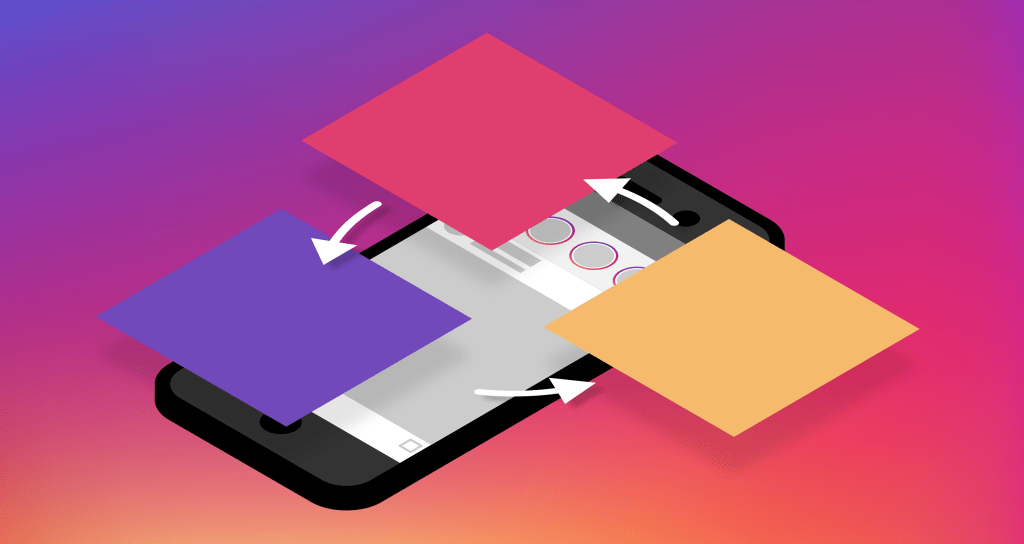
Instagram users were missing 70 percent of all posts and 50 percent of their friends’ posts before the app ditched the reverse chronological feed for an algorithm in July 2016. Despite backlash about confusing ordering, Instagram now says relevancy sorting has led to its 800 million-plus users seeing 90 percent of their friends’ posts and spending more time on the app.
Yet Instagram has never explained exactly how the algorithm chooses what to show you until today. The Facebook-owned company assembled a group of reporters at its under-construction new San Francisco office to take the lid off the Instagram feed ranking algorithm.

Instagram’s feed ranking criteria
Instagram relies on machine learning based on your past behavior to create a unique feed for everyone. Even if you follow the exact same accounts as someone else, you’ll get a personalized feed based on how you interact with those accounts.
Three main factors determine what you see in your Instagram feed:
- Interest: How much Instagram predicts you’ll care about a post, with higher ranking for what matters to you, determined by past behavior on similar content and potentially machine vision analyzing the actual content of the post.
- Recency: How recently the post was shared, with prioritization for timely posts over weeks-old ones.
- Relationship: How close you are to the person who shared it, with higher ranking for people you’ve interacted with a lot in the past on Instagram, such as by commenting on their posts or being tagged together in photos.
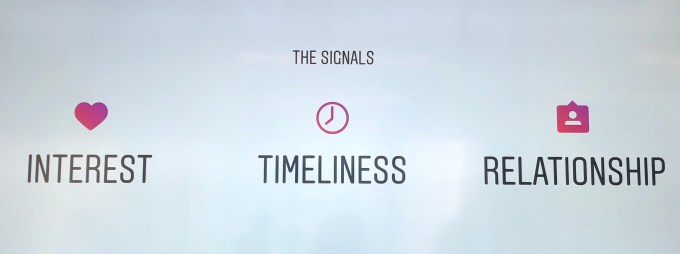
Beyond those core factors, three additional signals that influence rankings are:
- Frequency: How often you open Instagram, as it will try to show you the best posts since your last visit.
- Following: If you follow a lot of people, Instagram will be picking from a wider breadth of authors so you might see less of any specific person.
- Usage: How long you spend on Instagram determines if you’re just seeing the best posts during short sessions, or it’s digging deeper into its catalog if you spend more total time browsing.
Instagram mythbusting
Instagram’s team also responded to many of the most common questions and conspiracy theories about how its feed works. TechCrunch can’t verify the accuracy of these claims, but this is what Instagram’s team told us:
Techcrunch event
San Francisco, CA | October 13-15, 2026
- Instagram is not at this time considering an option to see the old reverse chronological feed because it doesn’t want to add more complexity (users might forget what feed they’re set to), but it is listening to users who dislike the algorithm.
- Instagram does not hide posts in the feed, and you’ll see everything posted by everyone you follow if you keep scrolling.
- Feed ranking does not favor the photo or video format universally, but people’s feeds are tuned based on what kind of content they engage with, so if you never stop to watch videos you might see fewer of them.
- Instagram’s feed doesn’t favor users who use Stories, Live, or other special features of the app.
- Instagram doesn’t downrank users for posting too frequently or for other specific behaviors, but it might swap in other content in between someone’s if they rapid-fire separate posts.
- Instagram doesn’t give extra feed presence to personal accounts or business accounts, so switching won’t help your reach.
- Shadowbanning is not a real thing, and Instagram says it doesn’t hide people’s content for posting too many hashtags or taking other actions.
Today’s Instagram whiteboard session with reporters, its first, should go a long way to clearing up misunderstandings about how it works. When people feel confident that their posts will reach their favorite people, that they can reliably build a public audience, and that they’ll always see great content, they’ll open the app more often.
Yet on the horizon looms a problem similar to what Facebook’s algorithm experienced around 2015: competition reduces reach. As more users and businesses join Instagram and post more often, but feed browsing time stays stable per user, the average post will get drowned out and receive fewer views. People will inevitably complain that Instagram is trying to force them to buy ads, but it’s a natural and inevitable consequence of increasingly popular algorithmic feeds.
The more Instagram can disarm that problem by pushing excess content creation to Stories and educating users about how the feed operates, the less they’ll complain. Facebook is already uncool, so Instagram must stay in our good graces.
Topics
Josh Constine is a Venture Partner at ~$3 billion AUM early-stage VC fund SignalFire where he invests in pre-seed startups with a focus on consumer. He teaches startup pitch writing and fundraising strategy as a recurring lecturer at the Stanford Graduate School Of Business, and with accelerators like Z Fellows, Inception Studios, and Stanford ASES. Previously, Constine was Editor-At-Large for TechCrunch where he wrote 4000 articles and was ranked the #1 most cited tech journalist in the world from 2016-2020 by Techmeme. Constine has led 300+ on-stage interviews and keynotes in 18 countries with luminaries including Mark Zuckerberg and the CEOs of Shopify, DoorDash, Snapchat, Instagram, and more. Constine graduated from Stanford University with a Master’s degree he designed in Cybersociology, and wrote his thesis in 2008 on why remixable memes would be the future of marketing. He has been quoted in the NYT and WSJ, is regularly featured on CNN for his thoughts on AI and Silicon Valley, and advises startups on PR, fundraising, and organic growth.