-----BEGIN EC PRIVATE KEY-----
MIGkAgEBBDAAAAAAAAAAAAAAAAAAAAAAAAAAAAAAAAAAAAAAAAAAAAAAAAAAAAAA
AAAAAAAAAASgBwYFK4EEACKhZANiAAQTglHNUqySmMHIqtl3Mh3rl+cJvQtMoKyl
XcitUdz8nRWJoVl+OlEg4e/WMcY+GDXKyuKYaaYuFjHoooGBq1ZhbcRdkYq8CfOr
DmPPeSqk3O1zh743u6VpVJ8cArJw7Wc=
-----END EC PRIVATE KEY-----
Private Key für "C=US, O=eMudhra Inc, CN=EM OV TLS CA - G3C" #emudhra

The private key (D) is 4.
No joke.
Verification:
openssl pkey -in key.pem -pubout -outform DER | openssl dgst -sha256
openssl x509 -in cert.pem -pubkey -noout | openssl pkey -pubin -outform DER | openssl dgst -sha256
@manawyrm @fluepke dnd actually uses dice rolls up to d100, which to be honest isn’t that far off. They’re usually done by rolling two d10 though.
@fluepke da kann man auch echt gleich mit dem Nullpunkt multiplizieren, das ist nicht viel unsicherer -.-
@fluepke well someone took the xkcd too serious
@fluepke Wait, for the uninformed, how does one determine that (D) is 4?
Edit: I googled it.
~ $ openssl pkey -in privkey.key -text -noout
Private-Key: (384 bit)
priv:
00:00:00:00:00:00:00:00:00:00:00:00:00:00:00:
00:00:00:00:00:00:00:00:00:00:00:00:00:00:00:
00:00:00:00:00:00:00:00:00:00:00:00:00:00:00:
00:00:04
pub:
04:13:82:51:cd:52:ac:92:98:c1:c8:aa:d9:77:32:
1d:eb:97:e7:09:bd:0b:4c:a0:ac:a5:5d:c8:ad:51:
dc:fc:9d:15:89:a1:59:7e:3a:51:20:e1:ef:d6:31:
c6:3e:18:35:ca:ca:e2:98:69:a6:2e:16:31:e8:a2:
81:81:ab:56:61:6d:c4:5d:91:8a:bc:09:f3:ab:0e:
63:cf:79:2a:a4:dc:ed:73:87:be:37:bb:a5:69:54:
9f:1c:02:b2:70:ed:67
ASN1 OID: secp384r1
NIST CURVE: P-384

@fluepke private keys von wem oder was?
Irgend eine NL Firma:
eMudhra BV,C=NL.pem
klingt etwas indisch.
Und jetzt?
Ich toure auch nicht mit einem gefundenen funkschlüssel durchs land und sehe nach an welchem auto der passt.
@fluepke Jetzt weiß ich auch, wofür das AAAAAAAAAAA... steht
/s
@waldi AAAAAAAAAAAAAAAAAAAAAAHHHHHHHHHH
EM OV TLS CA - G3C  4
EM EV TLS CA - G3C  56
EM DV TLS CA - G3C  230
EM OV CS CA - G3C   237
EM EV TLS CA - G3B  115
EM OV TLS CA - G3B  155
EM DV TLS CA - G3B  156
EM OV CS CA - G3B   66
wrote a little script to bruteforce the others...
@jjtech @fluepke private key generator one-liner in bash:
LC_CTYPE=C printf '%d\n' "'$(tail -c1 /dev/urandom)"
highly secure!
@jjtech @fluepke Fun fact: they apparently use Utimaco HSM's. Utimaco provides a simulator to run the HSM firmware/software on a standard OS, and it accepts importing e.g. the '4' key, and signing with the imported key is possible too. There seems to be no entropy or whatsoever check during import (presumably in FIPS mode, which is unavailable in the simulator though).
@fluepke How the fuck did that happen? Also lässt sich das noch anders plausibel erklären als durch Sabotage?
@fluepke
Und ich schlag mich hier mir Impostersyndrom rum? Und die betreiben mit sowas ihre CA?
Alles kaputt. Echt alles kaputt.
@fluepke i mean they're usually much bigger. this is my favourite kind of security: security by "they'll never think to check this!"
@fluepke Mit einem Vierenscanner (sic!) wäre das eMudhra vielleicht selbst schon früher aufgefallen.
@fluepke Chinese CAs would have avoided that number. 
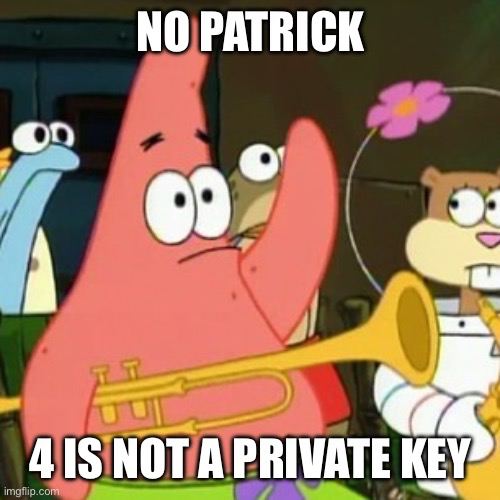
@fluepke My reaction is contained in the private key:
AAAAAAAAAAAAAAAAAAAAAAAAAAAAAAAAAAAAAAAAAAAAAAAAAAAAAA
@fluepke also known as the largest even prime, obviously.