Gaming
Ars Technica sits down with Joseph Staten, the Creative Director of Halo 3: …
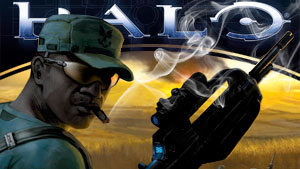
Halo 3: ODST has enjoyed an odd path to release. The game was hinted at during E3 2008, with Microsoft then pulling the plug on the big reveal, deciding instead to unveil the game at the 2008 Tokyo Game Show. While the title was originally spoken of in terms of a smaller add-on to the Halo 3 experience, it has since become a $60 two-disc game with extensive single and multiplayer experiences. The development time on the title? Barely a year. Ars Technica spoke with the game’s creative director Joseph Staten to find out just exactly how much of a cowboy project this is.
“I wouldn’t say we were flying by the seat of our pants,” he told us. In fact, the limits of the project were known from the start. “We knew it was going to be a modified version of the Halo 3 engine. We knew we had a smaller team, and we knew we had a year. From there we began to make plans,” Staten said. The original set of projections they were working with came from the development of Halo 3, and of course included padding to iron out and test the engine. Except now the team was working with an engine they knew well, and had mature development tools.
“With a totally stable engine, in the first three or four months, we realized we’re moving a lot faster than we thought we would.” The ideas began to expand, and he said they quickly understood they could “bite off” much more than anyone had at first assumed. “What you saw, what we announced as we were beginning production, at that point we hadn’t benefited from those savings yet,” he explained. “We were actually going in too cautiously, and we were able to stretch a bit.”
But without Master Chief, is this still Halo?
Halo 3: ODST puts you in the boots of four Orbital Drop Shock Troopers between the timelines of Halo 2 and Halo 3, the game expands the story of what happens on Earth in that timeframe. Since you’re no longer a Spartan, there will be no regenerating health, no dual-wielding. You’re going to feel much more like a soldier than a superhero. How are gamers going to react to such a radical shift in gameplay mechanics and feel?
“People won’t feel like they’re missing anything if we did our job right,” Staten said. “We wanted to make sure people felt like an ODST, where in Halo 3 you feel like a Spartan. This is a different character; we have to take some things away, and add some things to nail that experience.”
People may have to make adjustments and get used to feeling slightly more vulnerable, but it’s not a bad thing to shake things up every now and again. “Players will feel very rooted in this new character, with tools very well suited for his job.”
It helps that the four-man squad—the game’s “main” character is an unnamed ODST called “The Rookie—is voiced by Nathan Fillion, Adam Baldwin, and Alan Tudyk. That’s quite the cast of talent, but we asked Staten if the game might suffer from feeling like something of a Firefly reunion.

Photos courtesy 20th Century Fox
“Keep in mind that these three guys did work with Halo 3,” he said. “So for us at least, that was a good indication that getting those guys together again was just about getting three talented actors in the studio… The tone of the piece and the characters were sufficiently different from what they did in Firefly that we weren’t concerned at all.” He explained that there were only two qualifications they were looking for: getting people who fit the characters, and who played the game and enjoyed it. All three men were Halo fans, which made the process of recording much easier.
There will also be an Oni agent overseeing the team’s mission, and she’ll be voiced by a name Battlestar Galactica fans will recognize rather easily: Tricia Helfer. She actually was in the same room as Nathan Fillion for a recording session, a rarity when it comes to voice work. “They brought a really great relationship with them into the studio,” Staten said. “We did their cinematic dialog and some mission dialog. It was great. There were scenes where having the connection was wonderful; their performances were stronger having them together at the same time.”
The game also benefits from the voice talents of one Nolan North, who became something of a voice acting star in the gaming world after his turn as Nathan Drake in the PS3 title Uncharted, and was more recently in the Xbox Live Arcade title Shadow Complex… among a long list of other games. Staten laughs when we ask whether you’re contractually obligated to hire North if your game has a male character. “I think so!” he replied.
Halo has always been a cinematic experience, a platitude that has become overused when describing games, but the level of voice talent in ODST is impressive, especially for science fiction fans.
Co-op is something that has to be considered from the jump
Halo has always been a game that has thrived in co-op, and that won’t change with ODST. It’s there from day one. “Every Halo game has been made with co-op in mind. It informs how we build our environments, how we create a scripting system—we have to build an AI that can do with co-op.”
It’s something that’s given thought from the earliest stages of development. “We acted on [co-op] from the get-go,” said Staten. “Every one of our missions was tweaked for two or more ODSTs going through the space. We made sure they had different routes to take, different roles to fill. The city is a great place to run around in with four guys.”
And what about Firefight? The game mode that allows up to four players to defend themselves against waves and waves of enemies. We asked if they get tired of hearing comparisons between Firefight and Horde mode, the ultra-popular multiplayer option from Gears of War 2 that has something of a striking resemblance to what Bungie has created.
Staten shrugs off the comparison, and claims Firefight was something they hoped to add to Halo 3, but ran out of time. “We play Horde mode, we think it’s really great. It’s absolutely the case that the kind of wave-based gameplay has been used in different games,” he told us. “It’s not a unique concept, what makes it unique and fun in ODST is that it’s brought to life in the Halo sandbox.” He listed what makes it special for Halo—the vehicles, the skill system, the weapons—and said that the game mode will have a distinctive Halo flavor.
An entertainment product, not just a simple gaming series
Much like the Star Wars films, Staten explained that anything that happens in the games becomes official Halo canon. It’s an important distinction, with the world of Halo now stretching from first-person shooters to real-time strategy games, a miniature game, novels, comic books, and an upcoming animated film.
“It’s a little more complicated with Microsoft spinning up a lot of interesting things in the universe,” Staten said. Now that Bungie is a completely independent entity, Microsoft has started a division called 343 Industries to deal with Halo as a franchise. Microsoft defines the group like so:
343 Industries is the publisher of the blockbuster “Halo” series of videogames and, as part of Microsoft Game Studios, oversees the “Halo” franchise, including novels, comics, licensed collectibles, apparel and more. 343 Industries is home to world-class developers working on future “Halo” projects, including “Halo Legends” and Halo Waypoint, as well as partnering with renowned developers such as Bungie LLC and Robot Entertainment to produce “Halo” games for Xbox 360 and Xbox LIVE.
“The story bible is actually this collaborative database between Bungie and the guys at 343,” Staten told Ars. “We’re all drawing from these facts and canonical details. In a lot of ways, ODST wasn’t defined ahead of time, but the story of ODST is now part of the canon.”
Reading between the lines, it seems as if Bungie has a good amount of freedom to shape the world of Halo, while still fitting into what we already know about the game’s backstory. The upcoming Halo: Reach—and you’ll receive entry into that game’s multiplayer beta with your purchase of ODST—will be Bungie’s last Halo title before moving onto new projects. Future Halo games will be handled by 343 Industries.
The game is finished, now what?
ODST is done, and will be traveling around the country making promotion stops at GameStop locations before being released next month. So what happens now? “I’m definitely going back to finish some games I missed,” Staten said. He cites Portal and Assassin’s Creed as two games he either didn’t have time to play, or still needs to finish.
What games excite him personally? “You know, from a story-telling point of view, I really enjoyed Shadow of the Colossus. As a writer, I tend to get most excited about games with very little dialog.” He paused for a second and laughed.
“Maybe I’m sick of writing dialog!”
Halo 3: ODST will be released for the Xbox 360 on September 22. Bring a friend.